-
Monel
MONEL® Wire Mesh – Alloy Overview
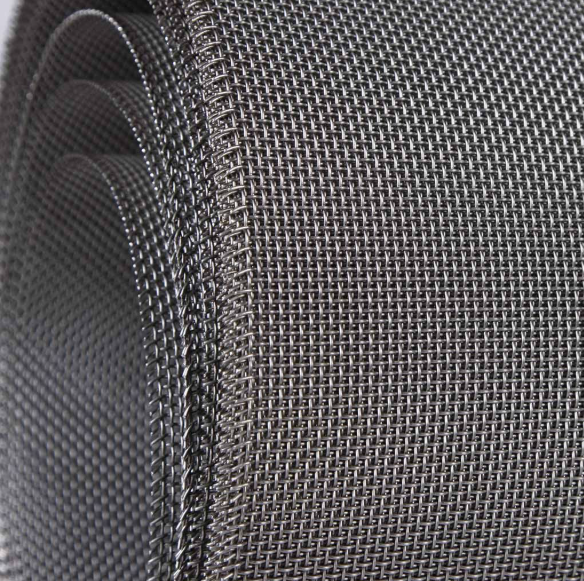
Monel wire mesh is a nickel-copper alloy that demonstrates good resistance in a wide variety of corrosive environments. The most common Monel alloy used in the wire cloth industry is UNS N04400 Monel alloy 400. Its nominal composition of ~67% nickel and ~31% copper traces its roots back to the early 1900’s when it was first developed by the International Nickel Company in an effort to use the high-copper-content nickel ore found in its Ontario, Canada mines. Monel wire cloth has excellent durability and strength following weaving, making it well suited for use in many industrial and commercial applications. In comparison to copper alloys, Monel wire mesh is more resistant to oxidizing conditions. Versus Nickel 200, Monel wire cloth has greater resistance in reducing environments. As its color and appearance nearly match that of stainless steal, given Monel wire mesh’s higher price point, it is not an alloy of choice for decorative applications. Some characteristics of Monel wire cloth which dictate its wide use are:
- Solid solution nickel-copper alloy.
- At or below room temperature, it is somewhat-magnetic when annealed.
- Above room temperature, it is non-magnetic (depending on composition impurities) when annealed.
- Withstands outdoor exposure without rusting; great for use in marine and seawater settings.
- Eccellente resistenza alla corrosione in un'ampia gamma di contesti industriali e chimici.
- Good for use in hydrochloric acid; great for use against pitting & crevice corrosion in chlorides.
- Excellent for use against chloride stress corrosion cracking.
- Not to be used in nitric acid.
- Max operating temperature of ~1000°F.
- Può essere tagliato, modellato e saldato.
-
Rete ondulata
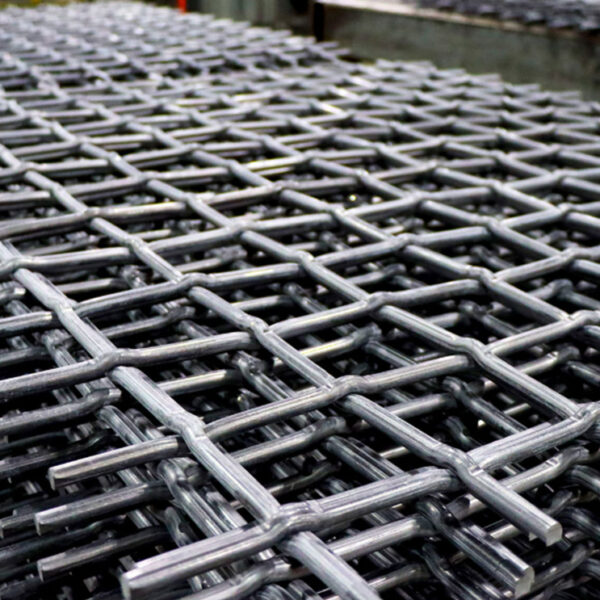
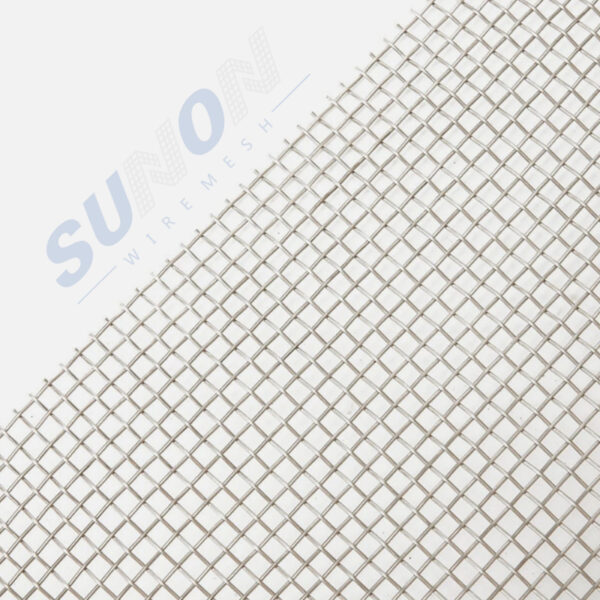
Pre-crimping wire enables the mesh to lock together, creating a tight weave with good rigidity and pleasing aesthetics. It is used extensively in architectural applications, as infill panels, cages and decoration. It is also used in acoustics, filtration, bridge guards, aerospace parts, rodent control, and truck grills. SUNON manufactures several styles, including double crimped wire mesh, intermediate crimped wire mesh, double intermediate crimped wire mesh, lock crimped wire mesh, and flat top crimped wire mesh.
-
Foglio perforato
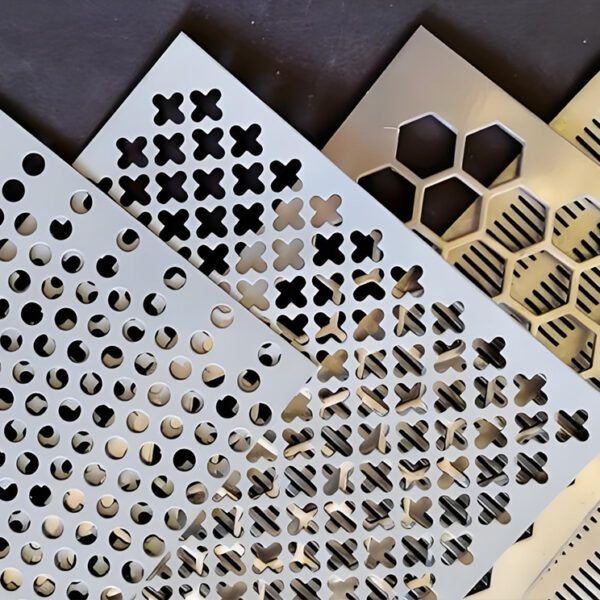
Perforated metal is manufactured by using punches or presses to create a series of holes, slots, bars, or decorative patterns in sheet metal. In earlier times, these sheets would have to be designed by skilled laborers using manual hand tools, but thanks to advancements in modern technology, perforated sheet metal can be produced using a variety of machining methods. At SUNON, we are rapidly and regularly growing our offerings of perforated materials. We strive to provide our clients with a quality product that meets their constantly evolving needs.
As our clients’ needs grow, so too does our selection of perforated patterns and materials. In addition to industry standard patterns and sheet sizes, we also offer advanced capabilities.
Whether your perforated metal needs are simple or complex, our experienced sales and engineering team has the technical expertise to ensure you get the exact product for your application and requirements; you’ll get the ideal product the first time, and each subsequent time you choose SUNON
-
Bronzo fosforoso
90-10 Phosphor Bronze Wire Mesh – Alloy Overview
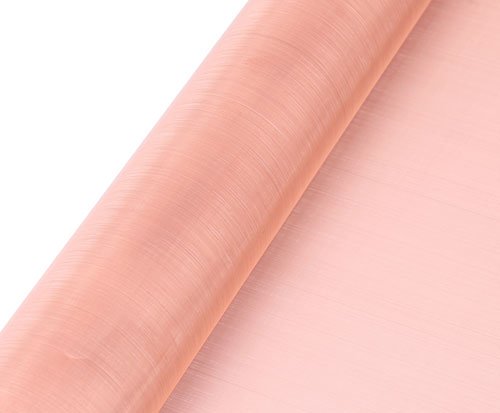
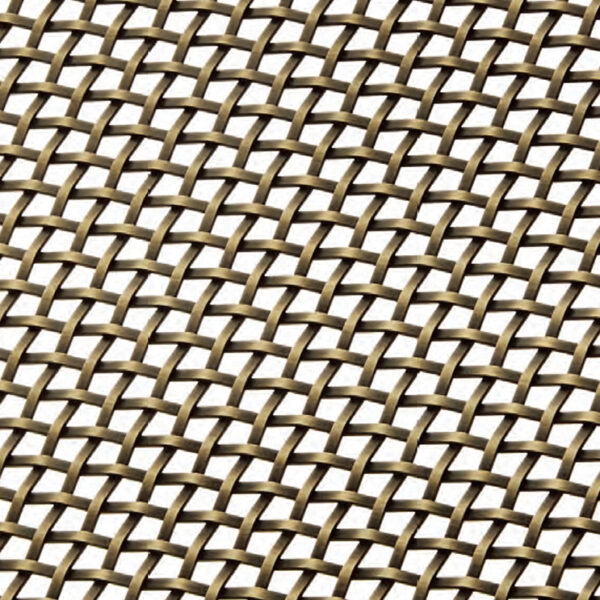
Phosphor bronze wire mesh (aka C220 bronze wire mesh) is the most extensively used bronze alloy in the industrial wire cloth world. As its common industry name suggests, 90-10 commercial bronze is comprised of 90% copper and 10% zinc, with small additions of lead (0.025%) and iron (0.025%). When compared to copper wire cloth, C220 bonze wire cloth possesses much better abrasion resistance, hardness, and tensile strength; it also exhibits improved corrosion resistance and lower electrical conductivity. As a higher zinc content results in a stronger, more ductile material, 90-10 commercial bronze is weaker and less ductile than other brass wire cloth alloys (i.e. 65-35 yellow brass). In comparison to phosphor bronzes, C220 bronze is a softer material. Some characteristics of 90-10 commercial bronze wire cloth which dictate its wide use are:
- The most widely used bronze alloy for wire cloth.
- Non-magnetic in all forms.
- Rich bronze (i.e. brown-red) in color.
- Resiste all'esposizione all'aperto senza arrugginirsi.
- Superior resistance to atmospheric corrosion vs. brass alloys.
- Corrodes when exposed to ammonia and other salts.
- Good thermal and electrical conductivity.
- Antimicrobial.
- Can be cut, formed.
-
Acciaio liscio
Plain Steel Wire Mesh – Alloy Overview
Plain Steel Wire Mesh is the most common plain steel alloy used in manufacturing industrial wire cloth screens due to its tensile strength and high impact resistance. Primarily comprised of iron, low carbon grades 1005, 1006, and 1008 are the most frequently used, and contain small percentages of carbon (0.0-0.1%), manganese (0.0-0.5% – which increases its strength), phosphorous (0.0-0.04%), and sulfur (0.0-0.05%). Low abrasion resistance and low corrosion resistance may limit usage in certain applications, however a wide variety of special protective coatings may be applied to improve resistance. Galvanizing (before or after) is the most economical way to protect against corrosion. Alternatively, a protective tin coating is often used on mud grade screens (tinned mill). In addition, steel wire cloth can be protected with epoxy coatings, PVC/vinyl coatings, and our electrostatic application of powder coating. Some characteristics of low carbon steel wire cloth which dictate its wide use are:
- Low carbon plain steel alloy.
- Relatively low cost and high strength material.
- Affascinante in ogni circostanza.
- Not corrosion resistant; rusts in most atmospheric environments.
- Protective coatings can be applied to improve resistance.
- Può essere tagliato, modellato e saldato.
-
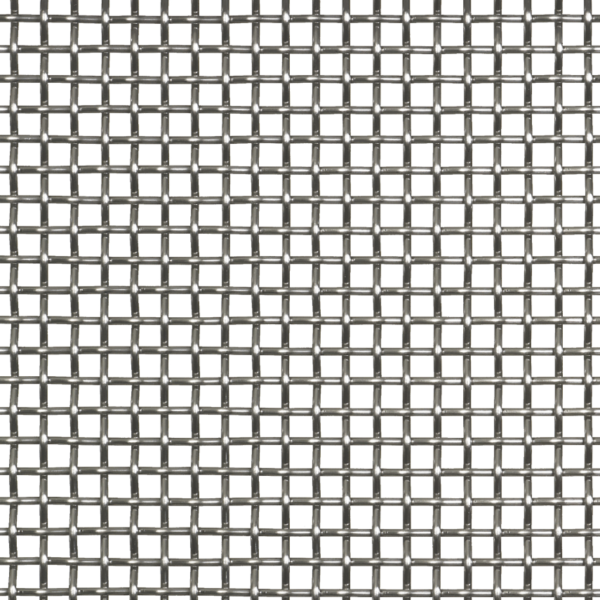
Rete metallica a trama semplice | Filtri intrecciati di alta qualità e reti industriali
La rete metallica a trama semplice è un tessuto metallico di alta precisione e prestazioni elevate, realizzato intrecciando fili di ordito e trama in acciaio inossidabile di prima qualità per formare strutture a maglia stabili e uniformi. Conosciuta anche come rete metallica in acciaio inossidabile, tessuto filtrante in acciaio inossidabile o tela setacciante in acciaio inossidabile, offre un’eccezionale resistenza strutturale, resistenza alla corrosione, resistenza al calore e un controllo preciso delle aperture per applicazioni industriali gravose.
A differenza delle normali reti metalliche, la nostra rete in filo di acciaio inossidabile è realizzata con una tecnologia di tessitura standardizzata e materie prime di qualità alimentare e industriale, garantendo una dimensione delle maglie uniforme, una precisione di filtrazione stabile, una lunga durata e un’elevata adattabilità ad ambienti di lavoro difficili. Si tratta del materiale fondamentale per la filtrazione, la vagliatura, la separazione e la protezione nei settori manifatturieri, di trasformazione e ingegneristici a livello globale.
-
filtro polimerico
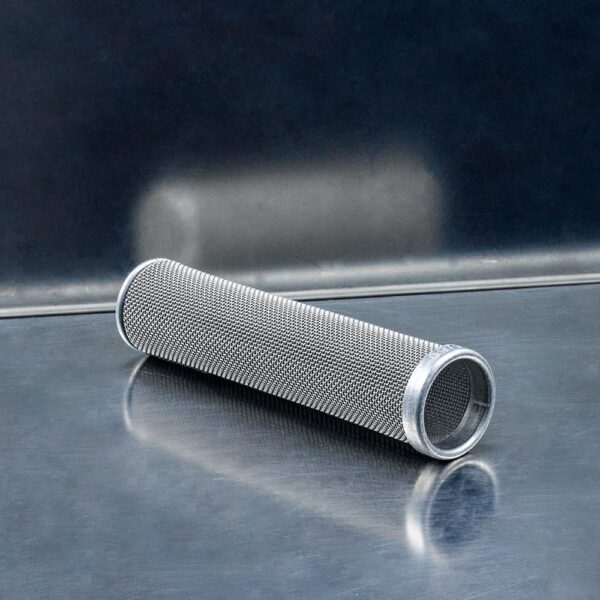
I setacci per estrusori e i filtri per polimeri sono solo due delle numerose tipologie di prodotti per la filtrazione offerti da SUNON WIRE CLOTH. La lavorazione dei polimeri e delle fibre richiede un'ampia gamma di filtri e mezzi filtranti per la lavorazione, la finitura e il riciclaggio dei materiali. SUNON WIRE CLOTH vanta oltre 25 anni di esperienza nella produzione di setacci per estrusori e pacchetti di setacci per l'industria dei polimeri e delle fibre. Offriamo prodotti standard e personalizzati, progettati per soddisfare i requisiti più esigenti del settore.
-
Modelli di rete metallica pre-agugliata
I divisori in rete metallica rappresentano la soluzione ideale per progetti in cui la separazione non richiede isolamento. Sono molteplici i motivi per suddividere uno spazio: definizione degli ambienti, atmosfera, privacy e altro ancora. SUNON WIRE CLOTH offre la possibilità unica di creare zone distinte all’interno di un’area aperta senza doverle isolare completamente dall’ambiente circostante.
Con motivi che vanno dal completamente opaco a oltre l'85% di apertura, i divisori in rete metallica possono essere tanto coprenti quanto trasparenti, a seconda delle esigenze del progettista. Ciò può contribuire a creare un senso di intimità in ambienti aperti come ristoranti e caffetterie.
L'uso della rete metallica per gli allestimenti è altrettanto utile per definire un'area di interesse per i prodotti in vendita. Grazie alla versatilità della rete metallica, è possibile creare sfondi discreti che mettano in risalto il prodotto in primo piano oppure realizzare design audaci che accentuino e valorizzino gli articoli esposti. Che si scelgano motivi semplici o elaborati, la trama, la profondità e il gioco di luci della rete metallica attireranno l’attenzione di chiunque la osservi.