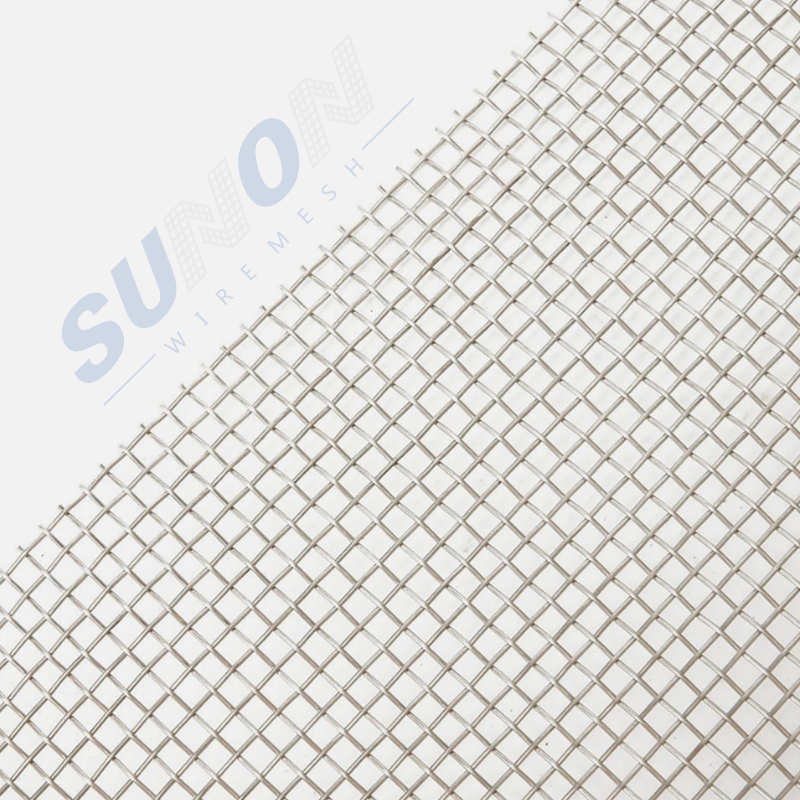
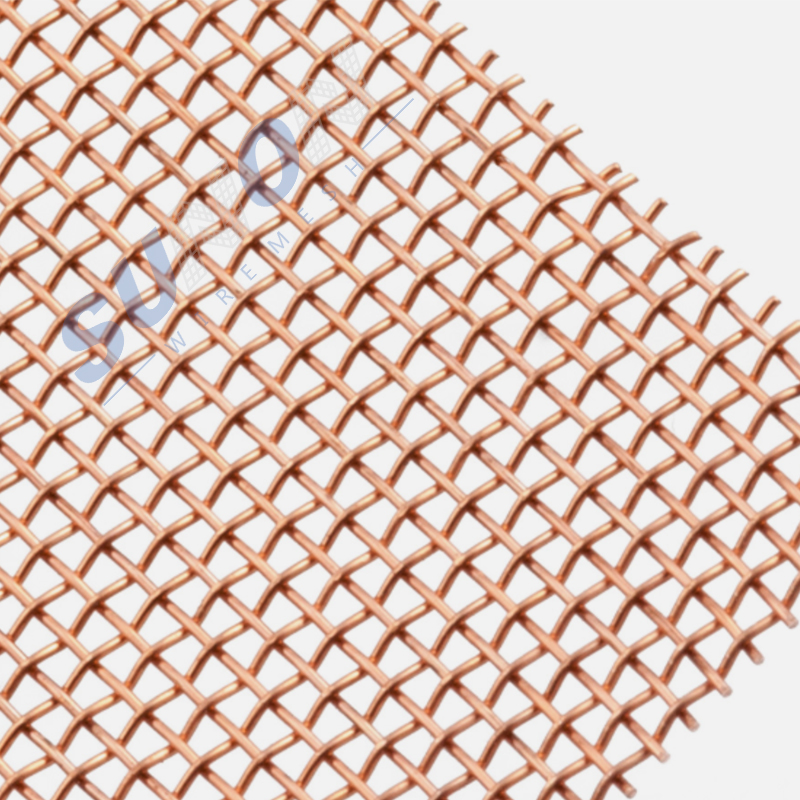
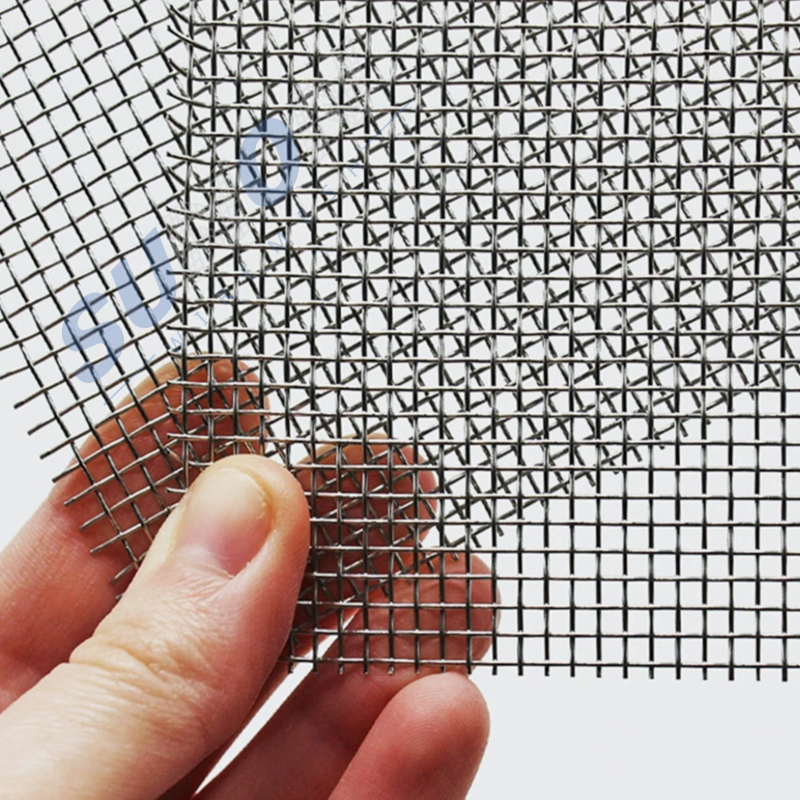
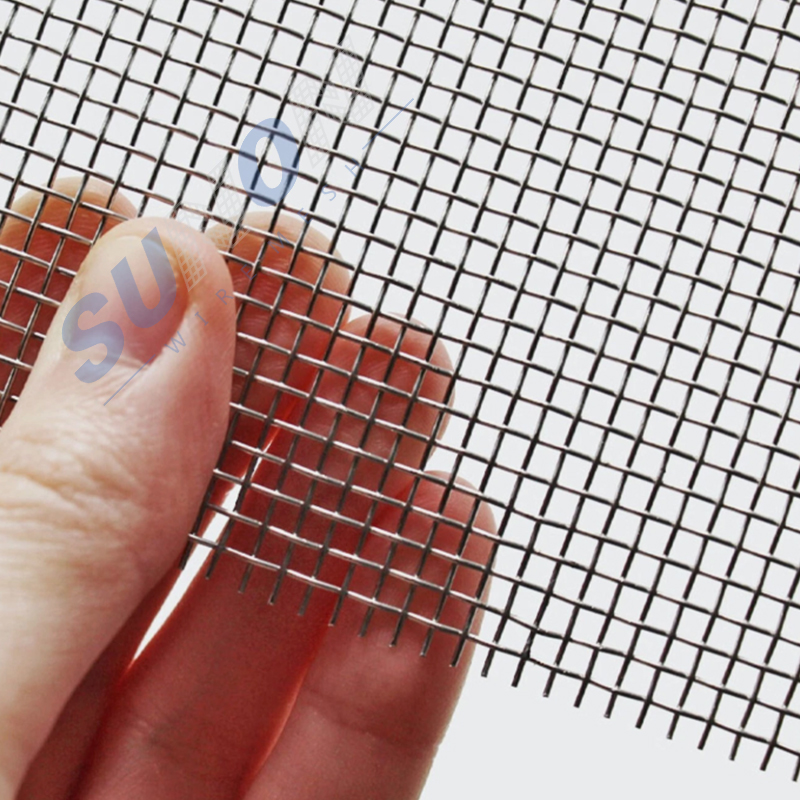
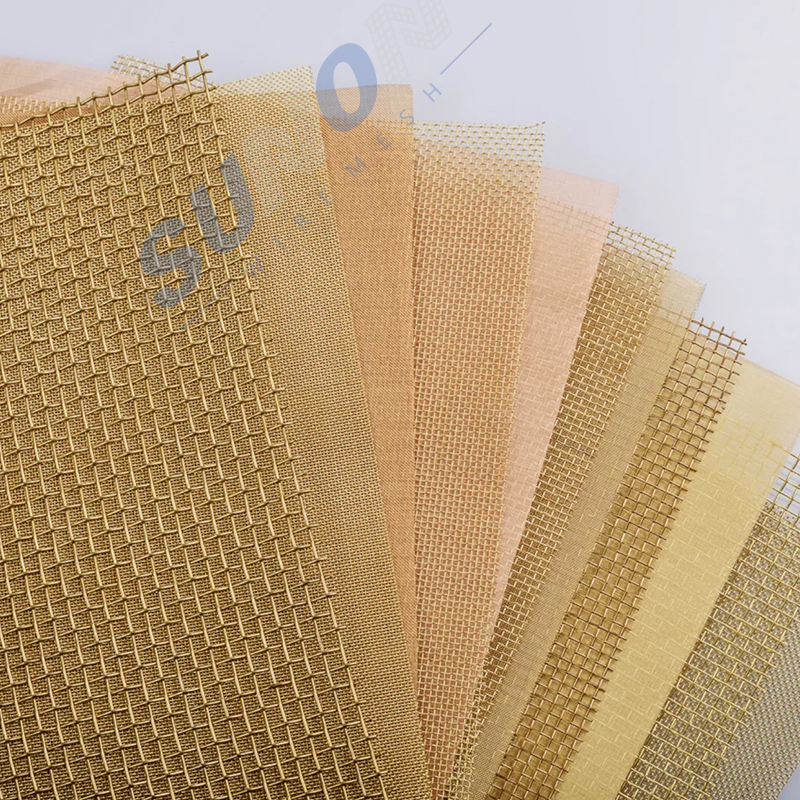

Key Product Benefits
✅ Superior Corrosion & Rust Resistance
Crafted from austenitic stainless steel alloys, our wire cloth performs excellently in acid, alkaline, moisture, salt spray, and mild chemical environments. It effectively avoids rust, oxidation, and material deterioration, maintaining stable performance in long-term outdoor or corrosive indoor use.
✅ Precise Filtration & Sieving Accuracy
Standardized weaving process guarantees uniform mesh openings, stable tolerance control, and reliable particle interception, classification, and liquid/gas filtration. Fully meets industrial, food, pharmaceutical, and laboratory precision screening requirements.
✅ High Temperature & Abrasion Resistance
Withstands continuous high-temperature working conditions, retains structural integrity without deformation, and delivers outstanding wear resistance for frequent material impact, friction, and repeated cleaning scenarios.
✅ Strong Structural Stability & Tensile Strength
High-tensile stainless steel wire and tight interwoven structure prevent tearing, stretching, and mesh deformation under pressure, impact, and vibration loads, suitable for high-load industrial production lines.
✅ Wide Compatibility & Easy Machining
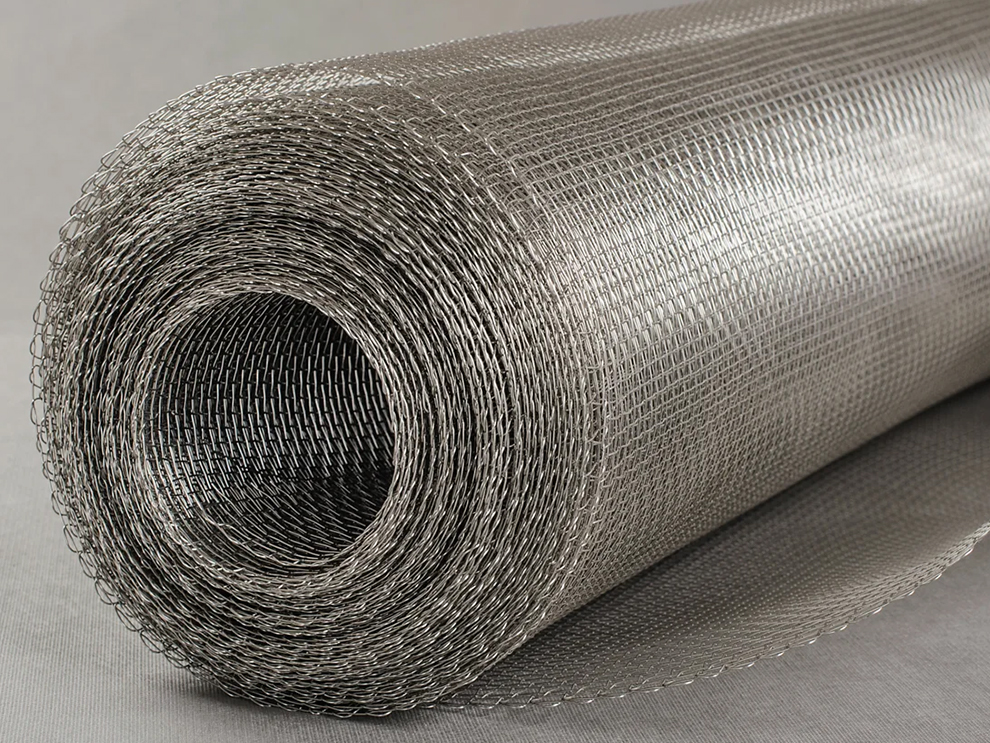
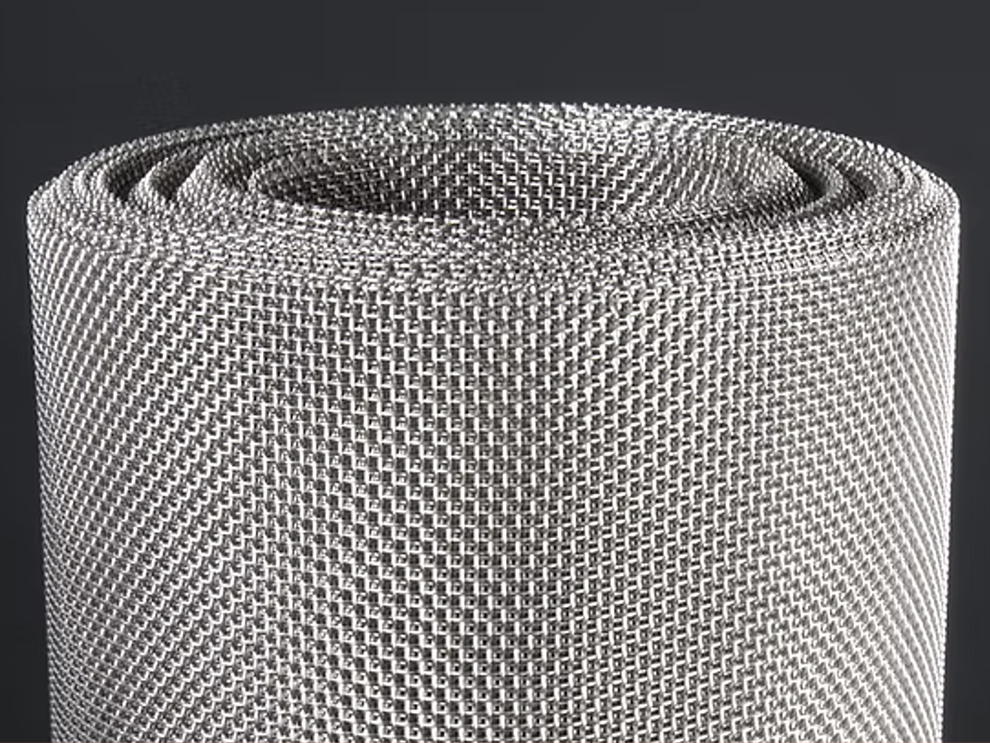
Supports cutting, bending, edge wrapping, welding, stamping, and frame mounting. Can be customized into sheets, rolls, discs, tubes, filter cartridges, and finished components to fit diversified equipment needs.
✅ Food & Industrial Safe Materials
Compliant with international material and hygiene standards, non-toxic, odorless, and free of impurity precipitation. Perfectly validated for food processing, beverage filtration, pharmaceutical, and drinking water treatment applications.
✅ Stock Availability & Customization Support
Maintains full inventory of standard specifications for fast delivery; accepts OEM/ODM customization for material, mesh count, wire diameter, size, weaving type, and edge treatment.
Available Materials
We provide full grades of stainless steel wire cloth to match different environmental and budget demands:
- AISI 304 / SS304
General-purpose standard grade, cost-effective, ideal for neutral environments, air filtration, water sieving, industrial protection, and daily industrial applications. - AISI 304L / SS304L
Low-carbon 304 variant, improves intergranular corrosion resistance, suitable for welded components and mildly corrosive working conditions. - AISI 316 / SS316
Molybdenum-added grade, enhanced salt, chloride, and chemical corrosion resistance, designed for marine, coastal, chemical, and high-humidity harsh environments. - AISI 316L / SS316L
Ultra-low-carbon 316 variant, top corrosion resistance, perfect for pharmaceutical, fine chemical, food hygiene, and high-corrosion precision filtration scenes.
Weave Types
Our stainless steel wire cloth covers all mainstream industrial weaving structures, tailored for different precision and flow demands:
- 일반 직조 와이어 천
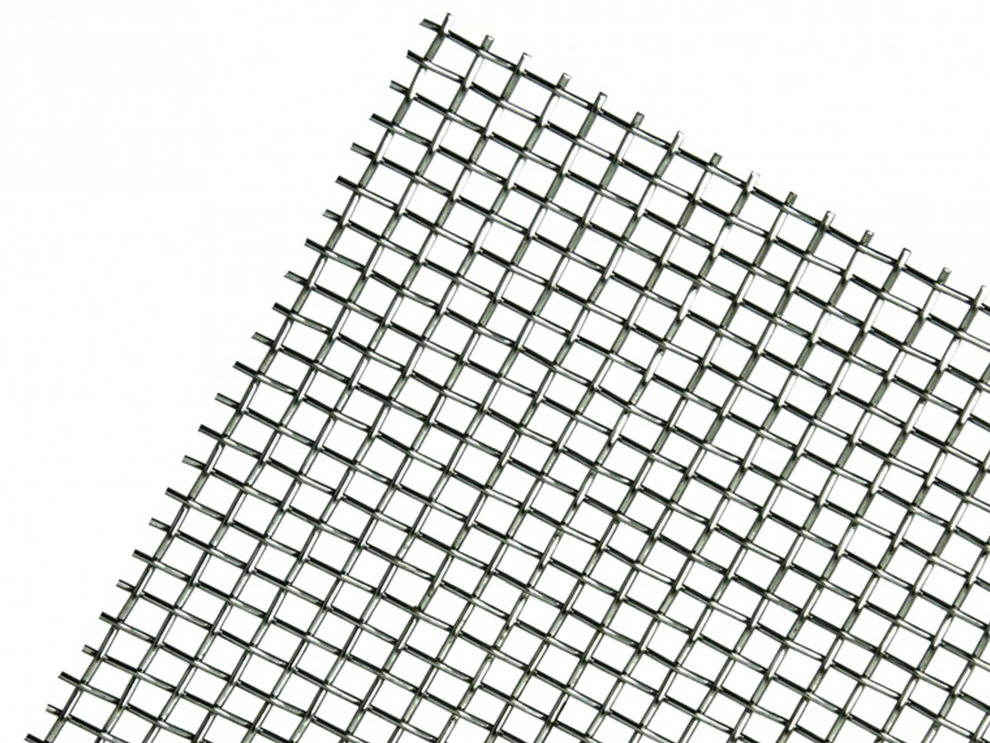
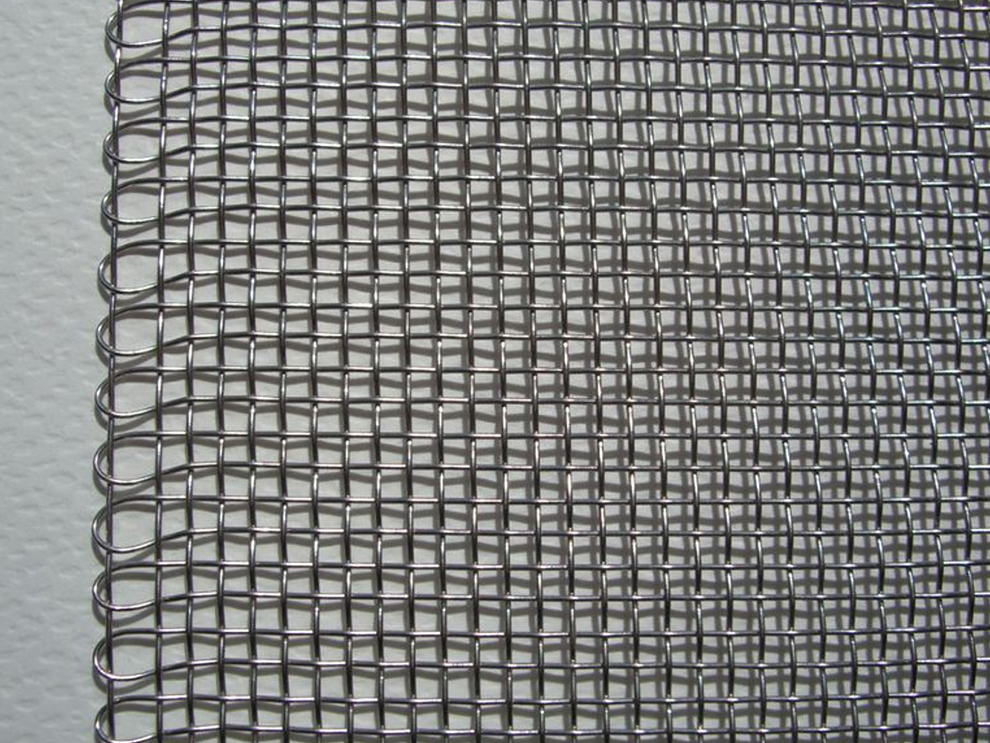
Most standard and widely used structure, warp and weft wires interlace alternately. Features uniform square openings, good rigidity, easy cleaning, suitable for general screening, filtration, protection, and ventilation.
- Twill Weave Wire Cloth
Wires cross over multiple strands in sequence, higher mesh count and finer filtration than plain weave. Offers higher density and strength, applied in medium-fine liquid filtration and particle classification.
- Plain Dutch Weave
Thick warp wires + fine weft wires, dense wedge-shaped openings, excellent dirt-holding capacity and backwash performance. Professional for liquid filtration, oil removal, polymer filtration, and fine impurity interception.
- Reverse Dutch Weave / Twill Dutch Weave
High-precision dense weaving structures, achieve ultra-fine filtration down to micron level. Used for high-accuracy chemical, pharmaceutical, and water treatment filtration systems.
Typical Product Specifications
Specification Item | Standard Range |
재료 | 304, 304L, 316, 316L Stainless Steel |
Weave Type | Plain, Twill, Plain Dutch, Twill Dutch, Reverse Dutch |
Mesh Count | 1 mesh – 500 mesh (custom ultra-fine mesh available) |
선경 | 0.05mm – 3.0mm |
Opening Size | Micron-level fine openings to large particle sieving openings |
Roll Width | 1m, 1.2m, 1.5m, 2m, custom width |
Roll Length | 10m, 30m, 50m, 100m, custom length |
Edge Treatment | Cut edge, locked edge, welded edge, wrapped edge |
Surface Finish | Bright, passivated, pickled, matte |
Note: Complete customized solutions are available for non-standard mesh count, wire diameter, dimension, shape, and assembly. |
Standard & Quality Compliance
Our stainless steel wire cloth is manufactured in strict accordance with international industrial specifications, ensuring batch stability and export-grade quality:
- ASTM A580 Stainless Steel Wire Standard
- ISO 9001 Quality Management System
- Food-grade hygiene compliance for food & beverage applications
- Consistent tolerance control for mesh opening and wire diameter
- Full factory inspection for weaving density, tensile strength, and corrosion resistance
- Supports third-party inspection, material certification, and factory audit
Wide Industry Applications
- Filtration & Separation
- Liquid filtration: water treatment, oil filtration, chemical solvent filtration, beverage filtration
- Gas filtration: air purification, dust removal, industrial exhaust filtration
- Fine filtration: pharmaceutical raw liquid, resin, ink, coating, polymer filtration
- Sieving & Classifying
- Mining and ore particle grading
- Food powder, grain, sugar, salt screening
- Plastic pellet, chemical raw material, pigment classification
- Laboratory test sieve and precision particle analysis
- Food & Beverage Industry
- Food baking, drying, and conveying mesh
- Juice, wine, edible oil filtration
- Food processing safety isolation and protection
- Hygienic-grade conveying and screening components
- Pharmaceutical & Chemical Industry
- Pharmaceutical raw material filtration and purification
- Chemical raw material screening and impurity removal
- Corrosive medium isolation and filter elements
- Clean room protection and ventilation mesh
- Architectural & Industrial Protection
- Window/door anti-insect, anti-theft, and ventilation screens
- Machinery safety guards, radiator protection covers
- Construction reinforcement, isolation mesh, decorative metal mesh
- Pest control, animal breeding, and facility protection
- Petrochemical & Marine Engineering
- Oilfield filtration, seawater desalination pre-filtering
- Coastal and marine equipment corrosion-resistant mesh
- Pipeline filtration, desulfurization and denitrification systems
- High-corrosion industrial facility protection
- Electronics & Manufacturing
- Battery electrode mesh, conductive mesh components
- High-temperature furnace conveying and isolation mesh
- Precision equipment dustproof and heat dissipation mesh
- Industrial automation screening and conveying accessories
Why Choose Our Stainless Steel Wire Cloth?
🔹 Professional Manufacturing Strength
Specialized woven wire mesh manufacturer with mature production lines, complete weaving equipment, and strict quality control, ensuring stable batch output and consistent product performance.
🔹 Premium Raw Material Guarantee
Only selects high-standard stainless steel wire from qualified large mills, strictly controls material composition, and rejects inferior recycled materials to ensure genuine alloy performance.
🔹 Full Customization Capability
Supports material, mesh, size, shape, edge treatment, and finished assembly customization, providing one-stop solutions for standard stock and special tailored needs.
🔹 Fast & Reliable Delivery
Maintains sufficient inventory of standard 304/316 stainless steel wire cloth rolls and sheets, shortening lead time for mass orders and small-batch trial purchases.
🔹 Competitive Factory Direct Price
Eliminates middleman margins, offers cost-effective quotes for wholesale, bulk procurement, and long-term OEM cooperation.
🔹 Global Export & After-Sales Support
Professional export packaging, complete documentation, and responsive technical support to solve selection, installation, and application problems for global buyers.
How to Select the Right Stainless Steel Wire Cloth
To confirm the most suitable product, please provide the following information:
- Required material: 304 / 304L / 316 / 316L
- Application scenario: filtration, sieving, protection, conveying, etc.
- Mesh count or opening size requirement
- Wire diameter preference
- Weave type: plain / twill / dutch weave
- Product form: roll / sheet / disc / finished filter part
- Dimensions: width, length, quantity
- Special needs: high temperature, corrosion resistance, food grade, custom shape
Our technical team will provide accurate specification recommendations and formal quotes within 24 hours.
Product FAQ
Q1: What is the difference between stainless steel wire cloth and wire mesh?
A: In industrial applications, stainless steel wire cloth generally refers to precision woven metal fabric with uniform openings, mainly used for filtration and sieving. Stainless steel wire mesh is a broader term, including woven, welded, and expanded metal products. Our core product is high-precision woven stainless steel wire cloth for professional industrial use.
Q2: Which is better, 304 or 316 stainless steel wire cloth?
A: 304 is cost-efficient for general neutral environments; 316/316L has superior chloride, salt, and chemical corrosion resistance, ideal for marine, coastal, and chemical harsh environments.
Q3: Can you supply small trial orders?
A: Yes. We support small-batch sample and trial orders for product testing and project verification, with flexible MOQ for global buyers.
Q4: Can you make custom-sized sheets and rolls?
A: Absolutely. We provide customized cutting, slitting, and length cutting services, and can process finished components like filter discs, mesh frames, and filter cartridges.
Q5: What edge treatments are available?
A: Standard options: raw cut edge, locked edge, welded edge, cloth wrapped edge, metal wrapped edge to prevent wire loosening and burrs.
Q6: Is this product food safe?
A: Our 304/316L food-grade stainless steel wire cloth complies with food processing hygiene requirements, suitable for direct food contact scenarios.
Call to Action
Get Your Custom Stainless Steel Wire Cloth Solution Now
Whether you need standard stock woven wire cloth, high-precision filter wire cloth, food-grade 316L wire cloth, or fully customized industrial mesh components, we deliver professional, stable, and cost-effective products for global B2B buyers.
Contact Us For:
- Free product specification consultation
- Accurate quotation and lead time confirmation
- Custom sample production
- OEM/ODM bulk cooperation
- Technical filtration & sieving solutions
Get Quote | Request Sample | Custom Specification
Your reliable industrial stainless steel wire cloth supplier