-
358 Prison Mesh Fence
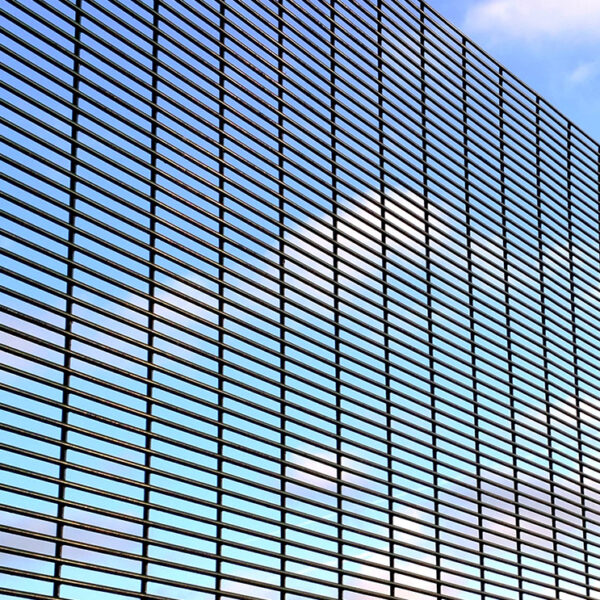
358 Prison Mesh Fence is a type of high-security fencing commonly used in industrial, commercial, and government applications. It is also known as an “anti-climb fence” or “prison mesh fencing.”
The name “358” refers to the measurements of the mesh openings in imperial units, where 3 inches by 0.5 inches equals approximately 76.2 mm by 12.7 mm. It is designed as a strong, anti-climbing and anti-cutting barrier, providing high security protection. The mesh is so small that you can even put your fingers on it, making it nearly impossible to climb and cut. At the same time, 358 High Security Fence is strong enough to form a rigid structure, which makes it perfect for protecting your property and achieving effective access control.
It is very flexible and suitable for various high security places, including but not limited to schools, commercial and industrial places, police stations, prisons, government agencies, airports, railways and seaports, etc.
-
Acoustic Barrier
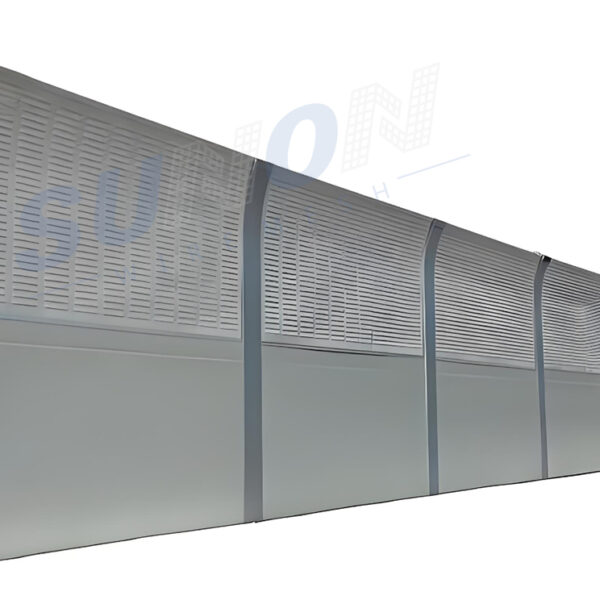
Acoustic fencing for road, rail, industrial, commercial and residential noise control. Reflective and absorptive barriers in timber, composite, metal and concrete. Modular panels, posts, foundations and gates. Used for boundary screening, plant enclosures and infrastructure upgrades.
The height of sound barrier is between 1m-5m, covering the period of validity mean noise reduction reach 10-15dB(A)(125Hz-40000Hz,1/3 times frequency)
-
AISI304
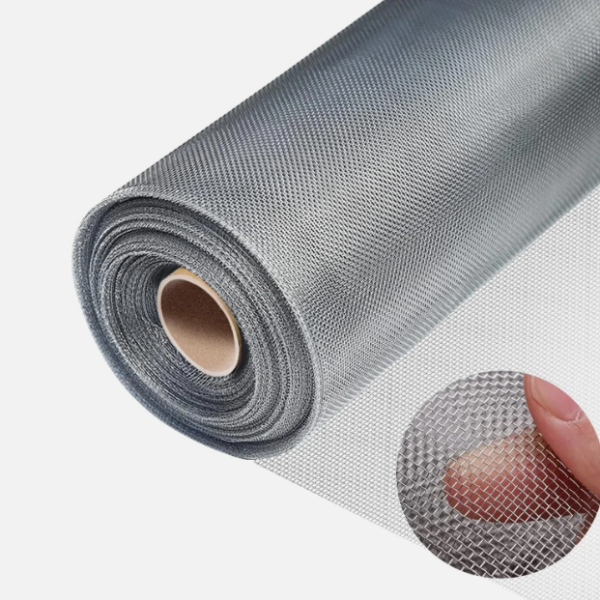
304 Stainless Steel Wire Mesh – Alloy Overview
Type 304 stainless steel wire mesh is the most extensively used material in the industrial wire cloth world. Type 304 (T-304, SS304) is the basic stainless steel alloy and is often referred to as 18-8 stainless steel due to its 18% chromium and 8% nickel composition. Where no specific stainless steel type is specified, it is assumed Type 304 stainless steel wire cloth is acceptable. Some characteristics of 304 stainless steel wire cloth which dictate its wide use are:
- Austenitic stainless steel.
- Non-magnetic when annealed.
- Slightly magnetic when cold worked.
- Withstands outdoor exposure without rusting.
- Excellent corrosion resistance in broad range of industrial and chemical settings.
- Not as corrosion resistant as T-316 stainless steel wire mesh, but less costly.
- Resists oxidation at 1400°F temperatures.
- Heating permitted between 900°F – 1600°F temperatures.
- Can be cut, formed, and welded.
-
AISI316 / AISI316L
316 Stainless Steel Wire Mesh – Alloy Overview
Type 316 stainless steel wire mesh is the second most extensively used stainless steel alloy in the industrial wire cloth world (T-304 being the most common). Type 316 (T-316, SS316) is the basic 18-8 alloy, stabilized by the addition of 2% molybdenum to provide better corrosion resistance to many salts and acids, along with increased pitting resistance to salt water, brine, and chlorine salts. T-316 can be used in bleach solutions containing up to 2% hydrochloric acid. Some additional characteristics of 316 stainless steel wire cloth which dictate its wide use are:
- Austenitic stainless steel.
- Non-magnetic when annealed.
- Slightly magnetic when cold worked.
- Withstands outdoor exposure without rusting.
- Excellent corrosion resistance in broad range of industrial and chemical settings.
- Superior corrosion resistance vs. T-304 stainless steel wire mesh, but is more costly.
- Resists oxidation at 1600°F temperatures.
- Can be cut, formed, and welded.
-
AISI430
430 Stainless Steel Wire Mesh – Alloy Overview
Type 430 stainless steel wire mesh is the most commonly used ferritic stainless steel alloy, and has a chromium content of 16-18%. Being a ferritic stainless steel, T-430 cannot be strengthened or hardened by heat treatment, but is more resistant to chemical attack and high temperatures when compared to T-410 stainless steel. As such, T-430 stainless steel displays good resistance to nitric acid, some organic acids, and a broad mix of other corrosive environments. Some characteristics of 410L stainless steel wire cloth which dictate its use are:
- Ferritic stainless steel.
- Magnetic in all conditions.
- Max operating temperature of ~1500°F.
- Resists oxidation at 1600°F temperatures, though strength loss occurs above 1300°F.
- Can be cut, formed, and welded.
-
AISI904L
904L Stainless Steel Wire Mesh – Alloy Overview
904L stainless steel wire mesh is a superaustenitic stainless steel alloy originally developed to have excellent corrosion resistance to environments containing dilute sulfuric acid. Today, it is used in a broad range of different process environments, including in both inorganic and organic acid settings. With high chromium (21%), nickel (25.5%), molybdenum (4.5%), and copper (1.5%) content, 904L stainless steel wire mesh possesses great resistance to general corrosion. Its chromium and molybdenum additions further provide 904L with superior resistance to general corrosion, pitting, and chloride stress corrosion cracking as compared to T-316L. In cases where cost is a factor, 2205 duplex is often substituted for 904L given its similar corrosion resistance, higher mechanical strength, and lower cost (keep in mind, however, 2205 duplex should not be used above 570°F). In cases where both higher corrosion resistance and strength are required, 2507 super duplex or ZERON® 100 super duplex are often substituted in place of 904L.
-
Aluminum
Aluminum Alloy 5052 Wire Mesh – Alloy Overview
Aluminum alloy 5052 wire mesh is a wrought aluminum-magnesium family “5000 series” alloy, and has one of the highest strengths of all the non-heat-treatable aluminum grades. As with other aluminum alloys, aluminum 5052 offers excellent corrosion resistance, even in extremely corrosive environments. Its added magnesium (2.5%) and chromium (0.25%) content further enhance its superior corrosion resistance, particularly against seawater and salt spray. While it will lose strength if subjected to high temperatures (390°F to 480°F), its strength can be increased via cold working (note: aluminum 5052 cannot be heat-treated). Some characteristics of aluminum alloy 5052 wire cloth which dictate its use are:
- Wrought aluminium-magnesium family (5000 series) alloy.
- Excellent corrosion resistance in broad range of extremely corrosive environments.
- Exceptionally resistant to marine environments and salt water corrosion.
- Very durable; one of the highest strengths of all non-heat-treatable aluminum grades.
- Cannot be heat treated; strength can be increased via cold working.
- Easily cut, formed, and welded.
-
Bar Grating
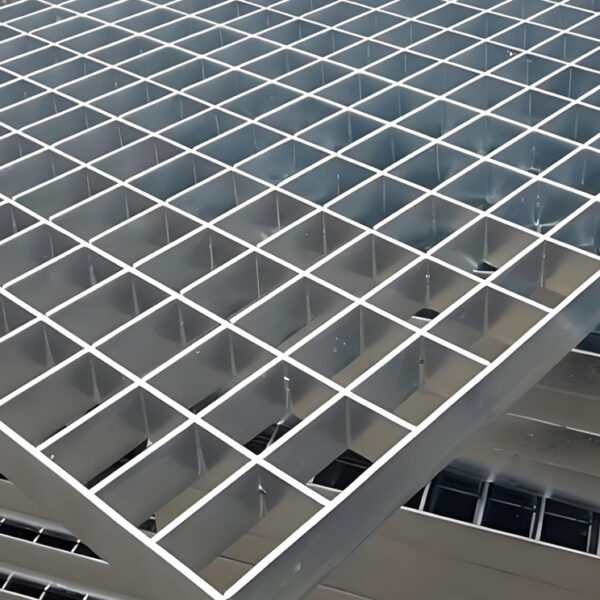
SUNON Wire Cloth is the best place to buy bar grating to fulfill your floor grating or surface needs. Bar grating is available in materials such as carbon steel, aluminum, galvanized steel, and stainless steel. SUNON Wire Cloth carries a full bar grating product line to meet the needs of our customers.